VIDEOS
PROFILE
cv
grad thesis
bfa porfolio
nonspheres
position
interview
chomsky
interview
niemeyer
interview
pleasure
interview
herreros |

Immediate Archaeologies Two or the Children's Crusade, Dresden, 2009
The Anxious Prop, Berlin, o2.2o10
(ongoing)
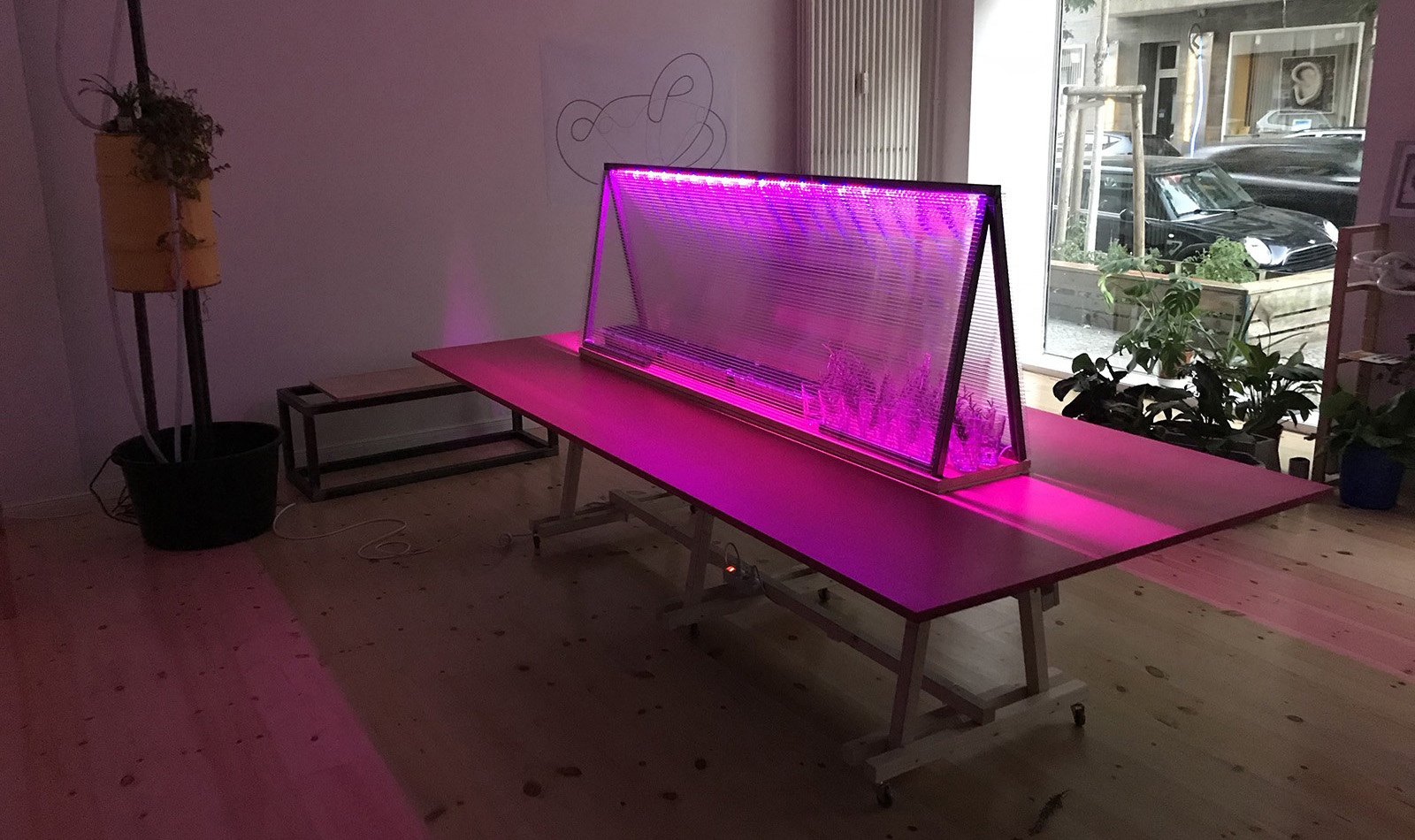
As a follow-up to The Turtle, Nonspheres and Immediate Archeologies series, The Anxious Prop is an adaptation of the object in the contemporary cultural field. Stimulated by current modes of production, performative and of fabrication, it is a pursuit of alternative scenographies. This loose adaptation is rooted in the prescient, anxious and unresolvable interstice of the artist-actor, searching to elucidate seeming disparities, for example, between intuition, new labor societies, and rapid prototyping techniques.
This prospectus is not necessarily intended to explore theater itself. There is no prescription, as the process and projects are yet unknown, nor will the interventions necessarily compliment one another nor operate on a traditional stage. It is an alibi, from model, to prototype, to environment, to materialize mental relations between disciplines, to open us to raise questions through scenography, one of the few platforms that can actually experiment with the strategic, tactical, physical, and phenomenological scales of space and contemporary cultural production. The Anxious Prop aims to be a prescient, theoretical and practical endeavor. It aims to foment alternative modes of production that will propose a contemplative object, plastic or figurative, testing its conceptual and material footprint, delivering criterias that question authorship and position, as tangible interventions in the public mind and body.
Oxígeno
Magazine, Spain, o5.2oo8
By
Vanesa Sánchez (full interview)
VS: How do you mix art, technology, politics and social
commitment in your work?
LBN: This rarely occurs simultaneously. I see the collectivity of my work
as a body that creates a series of environments, experiences where these
fields might affect one another. That's why I call my current effort 'Nonspheres',
as a reference to the relevant term Noösphere, coined by Soviet naturalist
Vladimir Vernadsky who locates human creativity as much as a part of what
is natural, just as the wind and the sea. I attempt to propose 'Nonspheres'
as a revision, within the context of the contemporary, questioning minimalism,
reductionism, and the commodification of ideas into ideologies. Ultimately,
I want to celebrate new economies of materials, social interdependence,
and the reticulation of human knowledge. As Gramsci said - "everybody
is an intellectual, but not everyone has the role of being an intellectual...
that is, once in a while we fry an egg or sew a tear on a suit, but that
does not necessarily mean that we are cooks or tailors."
VS:
Could you give us examples of your work that are related to sustainability?
LBN: I have difficulties with the term 'sustainability'. I understand
that in many ways we are in need of packaging and marketing ideas in order
to merchandise discourse. The problem is that we are selling everything
under the assumption that the economy is a somewhat stable structure based
on the false assumption that petroleum is somehow renewable. There's nothing
further from reality. The phenomenon 'peak oil' is unfortunately a pending
conflict, and we do not have the slightest idea as to what will be its
impact. The only thing we do know is that there is a powerful faction
in the United States that has no problem with maintaining the future of
their 'lifestyles' through the use of international, violent, military
force using religion & terrorism as pretext for resource conflicts
(creating a fabulous precedent for Russia, China, etc.). This alleged
pretext of freedom brand 'USA' is a Trojan horse itself, the 'prequiem'
(term coined by David Woodard) was Kuwait, and now is fully exercised
in Iraq, and in lesser-known areas such as Darfur and Chechnya. This 'branding'
of democracy reveals the alarming structural instability of the projects
of justice and human rights, as Foucault (and Freud before him) had foreseen.
So then, how are we going to use the term 'sustainable' if the variables
that we are using have fictitious values? That is why I am trying simultaneously
to reassess the relationship between the natural and modernity, as well
as the incongruence between religious cultures and the logic of the open
market... where questions might emerge, thus breaking the hermetic aspect
of 'sustainability' as we know it, in order to realign it to the practice
of everyday life. This is what we proposed in our microprojects at SOS48
in Murcia.
VS:
Tell us your experience at the festival SOS 4.8. What was the reaction
of the public?
LBN: It was one of curiosity. And so it was designed. When I proposed
the work with the filmmaker / artist Eric Adamsons, the idea was to create
another Trojan horse. This had two purposes: one, the idea of using materials
found in the immediate area of the Festival, in this case the concrete
formwork; two, creating an offering to the public that took the figure
of a war machine... simply put, the term was based on 'Nomadology' by
Deleuze and Guattari, where the intention is to position the work as a
counter-cultural agent. At SOS48, the idea was that in this case the horse
was a filtered stage rather than a container, where the spectator was
compelled to ask about what is this doing here at SOS48? ie. the context
of the sustainable, the logic of Empire, resource wars, neo-liberal colonialism,
all gazed through exercises of torture and pleasure (Abu Ghraib, S&M)
taking place in the viscera of the 'horse'. The stage transposed the public
using tactics of both the tragedy and satire, combined with chroma-key
technology, all framed within these performative, contemporary practices.
VS:
Tell us about 'Verde que te quiero Verde'; What is this work about?
LBN: Well, the title has two dimensions. The first is a commentary on
the diverse meanings and contradictions bearing the color green. I am
talking about hope, rebirth, the political and environmental movement(s),
the use of it to mask fictitious environments in cinema and television,
not to mention the visual association that goes beyond just being the
colour of the Muslim faith, but of Islamic fundamentalism. On the other
hand, Lorca, which is of course the author of the title, used his own
talent not only to deliver his art but also as a vehicle to carry a subversive
message against the violent suppression of political and sexual practices
during his time. I saw Lorca and the title as a reference to the tactic,
which emerges from the fragility of freedom and the human condition. That's
why, so far, I use the title twice: first in Kabul where I directed a
collaboration with local artists, and now in Murcia where we need to play
off from not only the excessive construction developments in this city,
but also the challenges related to immigration issues, fascist history
and the Aznar government's involvement in the North American exploitation
against the people of Iraq.
VS:
How do you feel about being part of a new generation or movement of artists
who base their works on a commitment to social critique?
LBN: We can see a clear trend, artistic and discursive, about such practices
from the moment that serious problems arose from the industrial era...
mainly the paternalistic thinking that assumes that we can force Nature.
Dewey, Emerson, Vernadsky, Jacobs, Freud, Duchamp, Hubbard, Fuller, et
al, are a few of a number of thinkers who identified, with great precision,
in text and / or in plastic works, these challenges. The difference today
is that we are again approaching one of those conflicting, potentially
disastrous moments where the exponential balance between population, the
economy of fossil resources and food supplies does not add-up. There are
many artists / colleagues whom I admire enormously and with whom I share
the enthusiasm of our unspoken practices. I continue trying to generate
work that addresses the aesthetics of these challenges, but I do not want
to pigeon-hole them into a movement. If we are lucky, all practices will
realign their footprints back into the temporal scale of Nature, ceasing
to live in the fallacious faith that technology and the heavens will solve
everything and that there will be no beauty without it. Yes, faith and
technology are components, but it is clear that our genius will not exceed
Nature, and that it is a matter of readjusting to her rhythm. Nature stays;
We are the ones that go.
VS:
What do you think are the possibilities of art as a weapon to change (and
improve) the world?
LBN: Well, this is a controversial matter in the art world. There are
purists such as Richard Serra that I think, ironically, fear the amplification
and evolution of art, saying that art is 'purposefully useless'. However,
what happens when he makes a massively printed and disseminated illustration
based on the events at Abu Ghraib with the words 'STOP BUSH'? So in the end
art has the capacity to be useful, morally and ethically. I'm not interested
in the slightest to dedicate myself to this because I find it didactic
and boring. But I do believe that artists have the right and ability to
position themselves in public, to provoke questions within an audience,
to think about what does it mean to live consistently in the future. For
this we need much more continuous and relentless discourse bringing this
conversation and its factors to the public table.
|
Recent
Projects
The Turtle Three, mobile scenography for workshops and exhibitions, Etsy Berlin 2010
The Turtle Two, mobile scenography for workshop and exhibition Berlin / Hamburg / Munich, in collaboration with The Product 2009
Immediate Archeologies Two or The Children's Cruade, proposal to turn abandoned slaughterhouse into greenhouse, curated by Lukas Feireiss, Dresden, Germany Ostrale 2009
Immediate Archeologies at Program, in collaboration with choreographer Morgan Belenguer, curated by Carson Chan and Fotini Lazaridou-Hatzigoga, Berlin, Germany
Stonemasonry in Context Workshop, Mallorca, Spain
'Ephimeral Operations on the Surface of the Earth' honorable mention, Urbanacción Contest, Madrid Architect's Guild (COAM), in collaboration with Susana Velasco, Madrid, Spain (PDF Download)
Memorial for the Victims of the NS Military Courts, concept development and art production for Julia Scher, Cologne, Germany
Book Designer & Collaborator, Herreros Arquitectos first prize submission, Munch Museum Competition, Oslo, Norway
Lissajous Harp, concept development and art production for Elín Handóttir, Reykjavik Art Museum, Iceland (in progress)
ARCO 2009 VIP lounge, designer of paneling and mat system for Juan Herreros, Madrid, Spain
Nonspheres XII for Joyce, Queens Road HongKong, China
Herreros Aquitectos, website and graphic design, Madrid, Spain
Nonspheres
IX / Fledermäusehaus I for Sculpt the Future and Phillips de Pur, London, England
Nonspheres
Variant 139 at Art Athina 2008, Athens, Greece
Nonspheres
VIII / Verde que te quiero Verde II at SOS4.8 with Eric Adamsosns, Murcia, Spain
Transmodal
Sweden, public space project with Färgfabriken, Stockholm-Östersund, Sweden
28
de diciembre del 2008, collage series
Nonspheres
Variant 139 at Dark Science, Berlin, Germany
Nonspheres
VI at Preview Berlin, Germany
Nonspheres
V at Stadgalerij Heerlen, Holland
Nonspheres IV at Program Berlin (gallery) / (process)
Machinations, design development and art production for Michel de Broin, Musée national des beaux-arts du Québec, Montreal, Canada (process pdf)
Kabul
Verde que te quiero Verde by Ping Mag, Tokyo, Japan
Tsunami Safe(r) House, co-designer, directed by Carlo Ratti in collaboration withTsunami Design Initiative (Harvard) for the Prajnopaya Foundation, USA-Sri Lanka
Sinthome Workshop, participant, website co-designer
Recent
Print
Someone's Garden Magazine, Studio Visit by Daisuke Nishimura & Asako Tsurusaki, pgs. G-L, Issue 8, 2009, Tokyo
The Chain Berlin, Peeping Tom Digest, by Caroline Niemant & Stéphane Blanc, pgs. 220-221, May 2009, Paris
Milk X Magazine, Hong Kong, Nonspheres XII at Joyce, December 2008 (pdf)
The Art Fair Age by Paco Barragán, Edizioni Charta, Milan - New York 2008 pgs.92-93 (pdf)
Revista
Oxígeno, SOS4.8: 'Verde que te quiero Verde II / Nonspheres VIII'
by Vanesa Sánchez, June 2008 (pdf)
Frame
Magazine, Carbon Copy: 'Nonspheres IV' by Anna Kowalska, Jan/Feb 2008
(pdf)
Space
Craft by Lukas Feireiss, 'Verde que te quiero Verde & Nonspheres IV',
Die Gestalten Verlag 2007 (pdf)
Wynwood
Magazine, 'Nonspheres IV' by Lukas Feireiss, Oct 2007 (pdf)
Recent Digital
The Turtle Two : Portable Mini Architecture by Fabrizio Gallanti, Abitare Magazine Blog 11.4.2009
Picking up the Pieces by Ana Finel Honigman, ArtSlant, Immediate Archeologies at Program, Berlin
DigitalLifeDesign Conference Blog "Nonsphere Installation by Luis Berrios Negron", by Jil Heinrigs, Munich Germany
Dossier Journal 'The artist's studio: LBN', by Caris Reid, New York City
De
Zeen 'The Birds the Bats and the Bees by Various Designers', by Marcus
Fairs, London
Club
Oxígeno, SOS4.8: 'Verde que te quiero Verde II / Nonspheres VIII',
by Vanesa Sánchez, Madrid
Nonspheres
IV at Program, Metropolis Magazine by Kimberly Bradley, New York City - Berlin
Bhutto/Gonzalez-Torres
Collages by Javier Arbona, San Francisco
Nonspheres
IV by We Make Money Not Art
Nonspheres
IV
by Platoon Berlin
Nonspheres
IV by Diane A Shaded View on Fashion
Copyright © 2009
All rights reserved. The copyright for any material published on this website is reserved. Any duplication or use of objects such as images, diagrams and texts is not permitted without Luis Berríos-Negrón's written agreement.
Luis Berríos-Negrón is not responsible for any contents linked or referred to from his website. The contents will not be checked and are subject to control and liability of the responsible provider.
|